Welcome back, logo adventurer! You’ve explored sleek typography and minimalist marks. Now, it’s time to take a creative leap into a type of logo that literally brings your brand to life—mascot logos and character-based branding.
🐯 What Is a Mascot Logo?
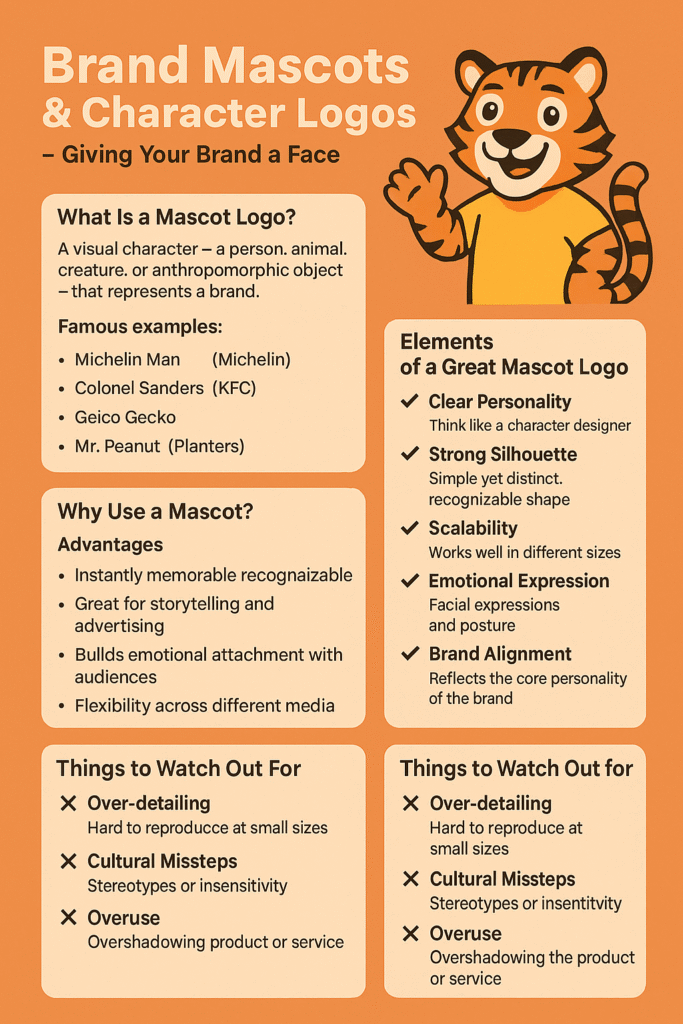
A mascot logo is a visual character—a person, animal, creature, or anthropomorphic object—that represents a brand. Think of it as your brand’s quirky spokesperson (or spokescritter).
Famous examples:
-
Michelin Man (Michelin)
-
Colonel Sanders (KFC)
-
Geico Gecko
-
Mr. Peanut (Planters)
While many logos hint at a vibe or tone, mascots literally embody a brand’s identity. They can speak, dance, wear costumes, and—yes—even tweet.
🤖 Why Use a Mascot?
Character logos aren’t for every brand, but when used right, they are powerhouses of emotional connection and engagement.
Advantages:
Try out and download our best font for free 👀



-
Instantly memorable and recognizable
-
Great for storytelling and advertising
-
Builds emotional attachment with audiences (especially kids and families)
-
Offers flexibility across different media (comics, animations, merch, etc.)
Ideal for:
-
Family-oriented businesses
-
Food & beverage brands
-
Sports teams
-
Apps, games, and startups looking for a fun identity
🛠️ Elements of a Great Mascot Logo
Designing a character is like casting the star of a movie—get it right, and your brand becomes iconic. Here’s what makes a standout mascot logo:
1. Clear Personality
Is your mascot playful, wise, mischievous, strong, or nerdy? Think like a character designer.
2. Strong Silhouette
A good mascot should be recognizable even in silhouette form—simple yet distinct.
3. Scalability
Your mascot needs to work on a billboard and a business card. Keep the details sharp, not cluttered.
Side Note : Promote & earn with Letterhanna’s affiliate program.
4. Emotional Expression
Great mascots communicate through expressions and posture. Think how Tony the Tiger grins or how the M&M’s guys roll their eyes.
5. Brand Alignment
Your character should reflect the core personality of the brand. A chill coffee mascot? Maybe a sleepy sloth. A fast delivery app? Maybe a sprinting robot.
🔄 Character vs. Mascot vs. Icon: What’s the Difference?
-
Character = A fully fleshed-out personality (can be animated, given a backstory, etc.)
-
Mascot = A branded character who represents the company
-
Icon = A simple symbol or shape; no personality or face
Mascots blur the line between brand and entertainment, turning customers into fans.
💡 Case Studies
-
KFC’s Colonel Sanders – A real person turned iconic mascot. Gives a sense of heritage, trust, and down-home cooking.
-
Mailchimp’s Freddie – A cheerful chimp that communicates creativity and friendliness—perfect for a quirky email platform.
-
Duolingo’s Owl (Duo) – Has evolved into a meme, a friendly stalker, and a motivational coach. Brand loyalty level: MAX.
⚠️ Things to Watch Out For
-
Over-detailing: Too many features make your mascot hard to reproduce at small sizes.
-
Cultural Missteps: Avoid characters that may be seen as stereotypes or insensitive.
-
Overuse: Don’t let the mascot distract from the product or service—it should support the brand, not overshadow it.
🔄 Modern Mascot Trends
-
3D rendering and animation: Brands now animate their mascots for YouTube, TikTok, or AR apps.
-
Dynamic mascots: Some mascots change expressions, outfits, or poses depending on the context.
-
Social media personas: Mascots now have Twitter accounts, respond with sass, and interact like influencers.
In 2025, mascots aren’t just logos—they’re brand influencers.
🧠 Pro Tip
If you’re creating a new mascot, consider designing a brand ecosystem around it. Think: supporting characters, settings, catchphrases, maybe even lore! This helps your brand stick in the consumer’s imagination like a Saturday morning cartoon.
🤯 Unique Fact of the Day
The first-ever mascot to be trademarked in the U.S. was the Michelin Man (aka Bibendum) in 1898—making him older than sliced bread, the ballpoint pen, and Mickey Mouse.
Here Are Some Fonts You Might Love! 👀